What Is a Regional Carrier Facility? Tracking & Timelines Decoded

Table of Contents
Editorial Transparency: TransitMetric is an independent logistics education platform. The tracking definitions, transit standards, and operational guidelines detailed in this guide reflect current 2026 frameworks as outlined in the USPS Domestic Mail Manual (DMM), the USPS Postal Operations Manual (POM), the UPS Tariff/Terms and Conditions of Service, and the FedEx Service Guide.
Business-Day Transit Estimator
Calculates Mon–Fri business days (skips Saturdays & Sundays). Does not account for federal postal holidays, weather exceptions, or customs clearance delays.
Decoding the Tracking Statuses: "Arrived" vs. "Departed"
For both e-commerce merchants and consumers, seeing a package bounce between confusing tracking statuses is a primary source of anxiety. These updates represent automated scan events—digital timestamps created when a parcel moves past barcode scanners positioned throughout the carrier's network.
Regional Hub Processing Timeline
Note: Processing times fluctuate based on daily volume, priority service class, and seasonal network congestion.
"Arrived at Regional Carrier Facility"
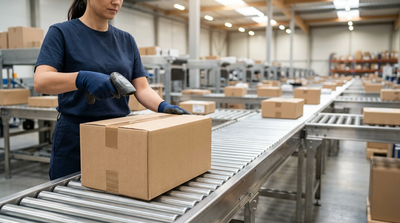
Logistical Meaning: Your package has been unloaded from a long-haul trailer or air container and inducted into the regional hub’s automated sorting systems. It is physically inside the building waiting to be routed.
Expected Duration: Under standard operating conditions, a parcel remains in this state for 12 to 48 hours. Lower-priority packages (like standard ground economy services) may sit longer if the facility is managing high volumes of express shipments.
"Departed Regional Carrier Facility"
Logistical Meaning: The package has cleared primary sorting, been assigned to an outbound trailer or air container, scanned out, and is currently moving in an In-Transit Status toward the local distribution center or post office. This officially transitions the package toward the Last-Mile Carrier—the local entity that will bring the box to your doorstep.
Expected Duration: It generally takes 12 to 24 hours to reach the local station, depending on the geographic distance from the hub.
Tracking Milestone Reference Matrix
| Tracking Status | Logistics Meaning | Next Destination | Avg. Time to Delivery |
|---|---|---|---|
| Arrived at Regional Facility | Inducted into high-speed sorting systems | Local Delivery Hub / Post Office | 1 to 3 Business Days |
| Departed Regional Facility | Sorted and loaded onto outbound linehaul | Destination Local Station | 1 to 2 Business Days |
| In Transit (Automated Update) | Moving between regional hubs or delayed in yard | Next Regional Hub / Local Hub | Variable (24 to 72 Hours) |
Inside the Hub-and-Spoke Network: How Regional Facilities Route Cargo
To understand why packages travel the way they do—sometimes appearing to travel in the opposite direction before heading toward you—it is essential to understand the modern Hub-and-Spoke Network.
The Hub-and-Spoke Logistics Model
Instead of driving thousands of individual trucks directly from every seller to every buyer, carriers consolidate freight. Regional facilities serve as the centralized "hubs." They pull in packages from surrounding local "spokes" (like community post offices, local dispatch centers, and merchant shipping docks), consolidate them onto massive commercial trailers, and dispatch them efficiently across the country.
Modern Sorting Infrastructures: RPDCs and SCFs
Carrier hubs are categorized by scale and jurisdiction:
- Sectional Center Facility (SCF): In the USPS network, an SCF handles localized mail processing for a specific geographic area defined by the first three digits of a ZIP code.
- Regional Processing and Distribution Center (RPDC): As part of current 2026 USPS modernization efforts, these are mega-hubs built to centralize parcel sorting across multiple states, drastically reducing the number of stops a package makes.
Linehaul Transportation and Transit Zones
Once a package is sorted, it requires Linehaul Transportation—the movement of freight between regional hubs via heavy commercial trucking fleets or air cargo. Carriers price these linehaul movements using Transit Zones (Zones 1 through 9). Zone 1 represents a shipment moving locally (usually within a 50-mile radius), while Zone 8 represents a cross-country movement. The higher the zone, the higher the base pricing and the longer the transit time.
Carrier-Specific Architectures: USPS, UPS, and FedEx Hubs
United States Postal Service (USPS) Network
The USPS operates a layered network. Historically relying on Network Distribution Centers (NDCs), the postal service is actively shifting operations to RPDCs and Local Processing Centers (LPCs). Within these hubs, parcels are subjected to strict priority processing tiers. According to the USPS Postal Operations Manual (POM), premium services like Priority Mail Express are processed immediately to meet strict cutoff windows. Lower-cost services, such as USPS Ground Advantage, are sorted only when machine capacity allows, meaning they may experience longer wait times inside the hub.
UPS & FedEx Private Hub Operations
Private commercial networks, such as FedEx Ground hubs and UPS regional air/ground facilities (like UPS Worldport), utilize highly automated sorting infrastructure running 24/7. These carriers have strict daily dispatch cutoff windows to meet guaranteed transit times. Packages that miss the late-evening linehaul dispatch will typically roll over to the next day's outbound truck.
The International Customs Connection
When an international order clears customs—whether through a Component Port or an International Service Center (ISC)—it is handed off directly to these domestic regional facilities. The package leaves the jurisdiction of Customs and Border Protection (CBP) and is injected directly into the domestic hub-and-spoke flow.
Why Is My Package Stuck? Troubleshooting Bottlenecks & Delays
A package seemingly "stuck" at a regional facility is the primary driver of customer service tickets. Understanding why this happens can help manage expectations and dictate when to file a claim.
Common Causes of Hub Delays
- High-Volume Congestion (Yard Backlog): During Q4 peak holiday shipping seasons, incoming trucks often arrive faster than they can be unloaded. Trailers wait in the facility yard, resulting in packages missing their "Arrived" scans and displaying a generic "In Transit" status for days.
- Weekend Sorting Dynamics: Regional hubs run sorting automation 24/7. However, the last-mile delivery spokes (local post offices) often have restricted Sunday schedules. A package sorted late Saturday night will frequently sit safely inside the regional hub until early Monday morning dispatch.
- Sorting Errors and Damaged Labels: If a shipping label is torn, smudged, or improperly formatted, high-speed optical scanners cannot read the barcode. The package is flagged for manual keying, which severely slows processing. In worse cases, a missort sends the parcel on an outbound truck to the wrong state, causing a routing loop.
Stuck Package Alert: A package showing "In Transit" between regional facilities for more than 72 hours is not necessarily lost. Wait at least 5 to 7 business days from the last physical scan before initiating a USPS "Missing Mail Search" or a UPS/FedEx claim, as carriers will rarely approve an investigation for standard delays.
Merchant Strategy: Zone Skipping to Avoid Hub Bottlenecks
For high-volume e-commerce sellers, passing packages through multiple regional carrier facilities slows down delivery and inflates shipping costs. Modern shippers often employ Zone Skipping—a strategy where merchants bypass origin hubs by consolidating orders onto a freight pallet and inducting them directly into the destination regional carrier facility.
Practical Worked Example: Calculating a Zone Skip
Scenario: A merchant in New York needs to ship 500 individual 2-lb parcels to customers in California (Zone 8).
Standard Method: The merchant gives 500 parcels to their local NY hub. The parcels are sorted in NY, placed on a cross-country linehaul, sorted again at a California Regional Carrier Facility, and finally delivered. Transit time: 5 to 7 days. Cost: $10.00 base rate per parcel (Total: $5,000).
Zone Skipping Method: The merchant places all 500 parcels on a single freight pallet (LTL) and pays a freight carrier $800 to drive the pallet directly to the destination California Regional Carrier Facility. Once inducted in CA, the packages instantly drop to a local Zone 2 rate.
The Math:
Step 1: Freight Linehaul Cost = $800
Step 2: CA Local Postage Rate (Zone 2) = $6.00 per parcel × 500 = $3,000
Step 3: Total Cost = $3,800
Result: By avoiding the origin and intermediate sorting hubs, the merchant saves $1,200 and eliminates the risk of their packages getting stuck in East Coast regional facilities, reducing transit time by roughly 2 days.
Actionable Next Steps: What to Do If Your Package is Delayed
If your package remains un-scanned at a regional facility past its expected delivery window, follow these steps:
- Verify the Service Tier: Check if your package is traveling via a guaranteed service (like UPS Next Day Air) or a non-guaranteed ground tier. Carriers only refund postage for guaranteed services that miss deadlines.
- Submit a Search Request: For postal deliveries, file a formal USPS Missing Mail Search. This puts a digital flag in the automated sorting system to route the package to the correct address if the label is damaged.
- Contact the Seller: If you are a consumer, always contact the e-commerce merchant. Under FTC rules, the merchant is responsible for the goods until physical delivery is completed; they must file the carrier claim or issue a replacement.
Frequently Asked Questions
What is a regional carrier facility?
A regional carrier facility is a high-volume hub where a shipping carrier consolidates, sorts, and routes packages bound for a specific geographic region before sending them to local delivery offices.
How long does a package usually stay at a regional carrier facility?
Under normal operating conditions, packages are sorted and dispatched within 12 to 48 hours. During peak seasons, severe weather, or labor shortages, this window can stretch to 72 hours or more.
Why has my package been "In Transit" or stuck at a regional facility for days?
This typically happens when the facility is experiencing sorting backlogs (such as during peak holidays), the shipping label is damaged and requires manual keying, or the package is sitting in an unloaded trailer in the facility yard waiting for an intake scan.
Does "Departed Regional Carrier Facility" mean my package will arrive today?
No. It means the package has left the high-volume sorting center and is on its way to your local post office or delivery station. Once it arrives at the local station and is scanned as "Out for Delivery," it will arrive that day.
Official Carrier Resources & Standards
To verify facility rules, routing definitions, or submit service claims, consult the following official documentation:
- USPS Domestic Mail Manual (DMM): Provides detailed rules on drop-shipments, Sectional Center Facility (SCF) entry, and mail consolidation standards. Visit pe.usps.com.
- USPS Operations: The primary portal for tracking, claim submissions, and the Postal Operations Manual. Visit usps.com.
- UPS Tariff & Terms: Outlines carrier guidelines on transit times, hub guarantees, and regional hub processing definitions. Visit ups.com.
- FedEx Service Guide: Features official explanations of Ground hub distribution processes and service standards. Visit fedex.com.
Frankie analyzes carrier rate structures, 3PL fulfillment services, and shipping software to uncover hidden fees and operational efficiencies—helping you build a faster, more profitable e-commerce supply chain.