What Is a Carrier Facility? Tracking Statuses & Delay Solutions

Table of Contents
A carrier facility is a regional sorting warehouse operated by logistics providers like USPS, UPS, FedEx, or DHL. The tracking status "Arrived at Carrier Facility" indicates your package has reached an intermediate processing hub to be sorted by destination ZIP code before heading to a local post office or terminal for final, last-mile delivery.
Editorial Transparency: TransitMetric is an independent logistics education platform. The tracking definitions, facility hierarchies, and operational guidelines detailed in this guide are based on standard 2026 frameworks from the USPS Publication 32 (Glossary of Postal Terms), the UPS Rate and Service Guide, the FedEx Service Guide, DHL Express Terms and Conditions of Carriage, and U.S. Customs and Border Protection (19 CFR § 10.151).
Carrier Facility Processing Stages
Note: Processing times are estimates based on standard 2026 carrier operational rules. Severe weather, missorted barcodes, and peak seasonal volume can extend facility transit times.
The Carrier Facility Hierarchy: Where is Your Package?
Because "carrier facility" is a generic catch-all term used by tracking software, it does not reveal exactly how close a package is to your doorstep. To estimate delivery times accurately, shippers and consumers must understand where a specific facility sits within a given carrier's distribution hierarchy.
1. United States Postal Service (USPS) Network
According to USPS Publication 32, mail flows through three primary facility tiers before reaching a recipient:
- Network Distribution Centers (NDCs): Massive, highly mechanized facilities that process bulk parcel post, media mail, and ground packages on a broad regional scale.
- Sectional Center Facilities (SCFs): Centralized processing plants that manage mail routing for a designated geographic area. These locations sort mail based on the first three digits of the destination ZIP code.
- Destination Delivery Units (DDUs): The final local postal facility (such as your neighborhood post office) responsible for sorting individual packages down to specific letter carrier routes for doorstep delivery.
2. United Parcel Service (UPS) Network
As outlined in the UPS Tariff/Terms and Conditions of Service, packages navigate an automated hub-and-spoke system (where packages from local "spokes" flow into centralized "hubs"):
- Regional Sorting Hubs: High-capacity centers—such as UPS Worldport in Louisville, Kentucky—that utilize automated conveyor systems to sort tens of thousands of packages per hour.
- UPS Customer Centers & Local Hubs: Intermediate terminals where shipments are divided, loaded onto iconic brown delivery vehicles, and dispatched for their final delivery routes.
3. FedEx Operational Infrastructure
The FedEx Service Guide categorizes its physical infrastructure largely by shipping speed:
- FedEx Ground Hubs: Mechanized sorting facilities designed primarily for regional and national ground transport via commercial trucking lines.
- FedEx Express Stations: Time-sensitive logistics depots positioned near major airports to handle swift air-to-ground transfers and time-definite sorting.
4. DHL Express Global Network
Under the DHL Express Terms and Conditions of Carriage, global shipments navigate distinct checkpoints:
- Gateways: Major airport facilities that manage international freight, execute customs clearance, and facilitate cross-border logistics handoffs.
- Service Centers: Regional terminals that handle local sortation and dispatch parcels directly to couriers for last-mile delivery.
Decoding "Arrived" vs. "Departed" Carrier Facility Statuses
Modern package tracking relies on automated scans at designated physical and virtual checkpoints. Understanding the technology behind these scans clarifies precisely where a package is located within an industrial complex.
- Origin Scan: The first physical tracking scan recorded at a carrier facility, indicating the logistics provider has officially taken custody of the package from the sender.
- Arrived at Carrier Facility: This indicates the package (or the shipping container holding the package) has entered the receiving yard of a regional hub.
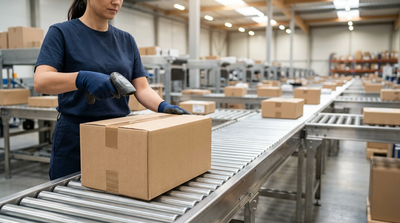
- Sortation: High-speed automated conveyor belts pass individual packages through optical character readers (OCRs). These cameras instantly read the shipping label barcode and route the package down a designated outbound lane corresponding to its destination ZIP code.
- Departed Carrier Facility: The sorted package has been securely loaded into an outbound trailer, and the transport vehicle has physically exited the facility grounds to head to the next hub or local delivery unit.
Practical Worked Example: The Containerization Scan Gap
It is incredibly common for tracking statuses to read "Arrived at Carrier Facility" for several days before updating. This is often due to containerization. Here is a step-by-step breakdown of how this scanning gap occurs:
- Input & Containerization: An e-commerce seller packs 500 individual orders. Instead of handing them over loosely, the seller loads all 500 packages into a single "Gaylord box" (a massive, heavy-duty corrugated pallet container).
- The Master Scan (Day 1 - 8:00 AM): The logistics provider assigns a single master barcode to the Gaylord container. When the long-haul truck reaches the regional carrier facility dock, a worker scans the master barcode.
- The Virtual Update (Day 1 - 8:01 AM): The scanning software instantly pushes an "Arrived at Carrier Facility" update to all 500 nested customer tracking numbers simultaneously.
- The Processing Reality (Day 2 - 4:00 PM): At 8:01 AM on Day 1, your specific package was still buried at the bottom of the un-sorted Gaylord. Because of massive daily volume, facility staff may not manually unload that specific Gaylord onto the primary OCR sorting belt until the following afternoon.
- Result: Your tracking appears "stuck" for 32 hours. The package is not lost; its individual barcode simply has not passed under the automated sorting camera yet.
Why Packages Get "Stuck" at Carrier Facilities: Troubleshooting Delays
Aside from containerization gaps, there are several logistical bottlenecks that cause transit exceptions (unscheduled events that halt a package's forward progress).
- Sortation Backlogs: During peak shipping seasons (such as the Q4 holiday rush) or in the aftermath of severe weather events (like winter storms halting highway operations), incoming package volume can temporarily exceed a facility's maximum daily processing capacity. This extends average processing times from 12 hours to 2–5 business days.
- Missorted Parcels & Routing Errors: If a shipping label is smudged, improperly printed, or wrinkled, the automated OCR scanner may misread the barcode. The package is either kicked off to a manual processing lane (adding 24–48 hours to transit) or loaded onto the wrong outbound trailer. If sent to the wrong city, it must be re-routed once the error is flagged at the next downline facility.
- Non-Conforming Items: Packages that are too large, irregularly shaped, or excessively heavy cannot safely travel on automated sorting belts. These items require manual handling, which is a slower process that inherently delays the "Departed" scan. Carriers also charge extra handling fees for these items.
Customs & Import Notice: For international cross-border shipments, a package cannot enter a domestic carrier facility network until it legally clears U.S. Customs and Border Protection (CBP). Import goods valued at $800 or less are processed under 19 CFR § 10.151 (Section 321 de minimis entries) at an international gateway. Only after CBP fully releases the cargo will it be handed over to the domestic carrier, finally triggering its first domestic "Arrived at Carrier Facility" tracking status.
B2B Shipping Optimization: Bypassing Facilities with Zone Skipping
For high-volume e-commerce merchants and dropshippers, every touchpoint at an intermediate carrier facility increases the risk of damage, adds 24 hours to transit times, and introduces potential variable surcharges (like weekly fuel adjustments on long-distance routes). To mitigate this, enterprise shippers utilize zone skipping.
Zone skipping is a strategic logistics maneuver where a merchant consolidates thousands of individual orders heading to a similar geographic region and transports them via less-than-truckload (LTL) or full truckload (FTL) freight, deliberately bypassing the origin and intermediate regional sorting hubs. The truck injects the freight directly into the destination SCF or DDU.
Advantages of Zone Skipping
- Reduced Transit Times: Eliminating multiple intermediate facility sorts cuts an average of 24 to 48 hours off total delivery timelines.
- Lower Shipping Costs: By injecting packages directly into a localized network (such as a USPS Destination Delivery Unit), shippers pay cheaper, low-zone local delivery rates rather than expensive coast-to-coast long-haul parcel rates.
- Fee Mitigation: Minimizing facility transfers lowers exposure to recurring long-haul fuel surcharges and diminishes the risk of non-conforming handling fees triggered by multiple automated belt transitions.
Trade-Offs & Limitations
- Volume Thresholds: This strategy requires consistent high density (enough daily or weekly order volume to fill commercial freight trucks).
- Upfront Freight Capital: Merchants must fund the upfront linehaul transport to move the consolidated freight to the destination facility.
- Tracking Complexities: Managing the data handoff between the linehaul freight carrier's system and the final-mile carrier's software requires specialized logistics software to prevent "blind spots" for consumers.
Logistics Optimization Tip: When evaluating current 2026 carrier rate schedules, review your historical shipping data for dense delivery ZIP codes. If you routinely send over 1,000 packages a week to a specific region (e.g., from a warehouse in New Jersey to customers in Southern California), auditing your data for zone-skipping viability could substantially lower your total landed costs while avoiding regional hub bottlenecks.
Frequently Asked Questions
What does "Arrived at Carrier Facility" mean on my tracking?
This status indicates your package has arrived at a regional sorting hub or distribution center operated by the shipping carrier (such as USPS, UPS, FedEx, or DHL). The package is waiting to be sorted by automated equipment and routed to its next transit leg or local delivery station.
How long do packages usually stay at a carrier facility?
Under normal conditions, a package typically spends 12 to 24 hours at an intermediate carrier facility. However, during high-volume shipping seasons, severe weather, or staffing shortages, packages can remain at a regional hub for 2 to 5 business days.
Can I go to a carrier facility and pick up my package directly?
Generally, no. Major regional carrier facilities (such as USPS Network Distribution Centers or FedEx Ground Hubs) are high-speed sorting warehouses that are not open to the public. You can only pick up packages from designated local retail locations, such as your local Post Office, a UPS Customer Center, or a FedEx Office location, and usually only after requesting a formal "Package Hold."
Why has my package been "stuck" at a carrier facility for days?
This usually happens when the massive shipping container or pallet the package is in has been scanned into the facility, but your individual package has not yet been processed through the automated sorting machinery. It can also occur due to unreadable damaged barcodes, seasonal sorting backlogs, or accidental routing errors.
Official Carrier Reference Materials & Technical Standards
For independent verification of standard facility classifications, standard transit workflows, and customs regulations, consult the official documentation published by logistics authorities:
- USPS Infrastructure Guidelines: Refer to the USPS Publication 32: Glossary of Postal Terms for structural definitions of SCF, NDC, and DDU postal operations.
- UPS Transit Scanning Definitions: The UPS Tariff/Terms and Conditions of Service documents standard scan milestones, hub arrivals, and package dimension limitations.
- FedEx Operational Guidelines: The FedEx Service Guide details FedEx Ground hub logistics, Express station mechanics, and transit exception rules.
- DHL Express Global Network Rules: Access the DHL Express Terms and Conditions of Carriage for Gateway customs processing and Service Center routing procedures.
- Customs Import Regulations: Review U.S. Customs and Border Protection regulations (specifically 19 CFR § 10.151) for guidelines governing Section 321 entries transitioning into domestic parcel networks.
Frankie analyzes carrier rate structures, 3PL fulfillment services, and shipping software to uncover hidden fees and operational efficiencies—helping you build a faster, more profitable e-commerce supply chain.