Luggage Shipping to Australia: Rates, Customs, and Carrier Rules

Table of Contents
Shipping luggage to Australia requires submitting an Unaccompanied Personal Effects (UPE) statement (Form B534) to claim duty-free entry. To avoid carrier "Additional Handling" surcharges, suitcases should be packed in double-walled cardboard boxes. All outdoor gear must be thoroughly cleaned of soil to pass strict Australian biosecurity (DAFF) inspections.
Editorial Transparency: TransitMetric is an independent logistics education platform. For current 2026 customs regulations, this guide references compliance frameworks published by the Australian Border Force (ABF) and the Department of Agriculture, Fisheries and Forestry (DAFF). Carrier surcharge data is sourced from the official 2026 service guides for USPS, DHL, UPS, and FedEx.
DIM & Billable Weight Calculator
Carriers bill whichever is greater: Actual Scale Weight or Dimensional (DIM) Weight. USPS 166 divisor applies to packages over 1 cubic foot (1,728 cu in).
1. Navigating Australia’s Customs: UPE Concession and Form B534
To ship unaccompanied luggage to Australia without paying heavy import duties and taxes, your shipment must qualify for the Unaccompanied Personal Effects (UPE) concession. The UPE concession is a legal customs exemption governed by the Australian Border Force (ABF) that allows individuals to import their used personal belongings duty-free.
Criteria for the UPE Concession
- Ownership Timeline: You must have owned and personally used the items for at least 12 months prior to their arrival in Australia. Brand-new purchases do not qualify and will be assessed for standard duty and the 10% Goods and Services Tax (GST).
- Intent of the Goods: The items must be your personal belongings, such as clothing, personal hygiene items, books, and worn footwear. They cannot be intended for sale, lease, or commercial distribution.
- Travel Requirement: You must have arrived, or intend to arrive, in Australia from an international destination.
The Mandatory Form B534 (Unaccompanied Effects Statement)
The core of this process is Form B534. This is a legally binding declaration that must accompany your Air Waybill (AWB) and commercial invoice. Failure to submit a fully completed, signed Form B534 will cause immediate customs clearance holds, administrative storage fees at the port of entry, and the automated assessment of duties and GST.
When completing the form, senders must be explicit. Avoid generic terms like "clothes" and instead list details such as "used cotton shirts and trousers." You must also declare all high-risk items, including any biological materials, wooden goods, or used outdoor equipment.
2. Australia’s Strict Biosecurity Laws: Passing DAFF Inspection
The Department of Agriculture, Fisheries and Forestry (DAFF) enforces some of the world's most stringent biosecurity laws to protect Australia's unique agricultural ecosystem. Every piece of inbound luggage is subjected to x-ray screening, physical inspection, or detector dog screening.
Australian Biosecurity Clearance Process
Note: If biological contaminants are found, the quarantine cleaning process typically adds 3 to 14 business days to your overall transit timeline.
High-Risk Items to Declare
- Outdoor & Camping Gear: Tents, sleeping bags, and camping tools must be entirely free of soil, clay, and organic debris.
- Used Footwear: Hiking boots, golf shoes, and running shoes are primary targets for DAFF inspectors. Sole treads must be scrubbed completely clean of dirt.
- Sporting Equipment: Golf clubs, bicycles, and turf-sport gear must be sanitized.
- Wooden and Organic Objects: Souvenirs made of raw wood, straw, or dried flowers must be declared and verified via the Biosecurity Import Conditions System (BICON).
Compliance Warning: If undeclared biological contaminants are found, DAFF will issue an intervention directive. You will be required to pay a mandatory quarantine cleaning fee to have the items treated, pay to return them to the origin country, or authorize their destruction. Ensure strict international shipping compliance before dispatching your luggage.
3. Carrier Policies: Boxing Your Suitcase vs. Shipping "Naked"
While you can technically apply a shipping label directly to a suitcase, major private carriers impose steep financial and operational penalties for unboxed luggage.
Suitcases shipped without an outer protective box are classified as non-standard packaging. Because their handles, straps, and wheels can snag on automated sorting belts, carriers must route them to manual processing. This triggers an Additional Handling Surcharge (AHS), typically ranging from $20 to $35 USD per piece.
Boxing Your Suitcase
- Avoids carrier Additional Handling Surcharges (AHS).
- Protects fragile wheels, telescopic handles, and zippers from conveyor damage.
- Allows for uniform stacking, reducing the risk of being crushed by heavier freight.
Shipping "Naked" (Unboxed)
- Saves the initial cost of purchasing a heavy-duty cardboard box.
- Triggers immediate AHS fees, often costing more than a box.
- High risk of the shipping label peeling off the fabric or hard shell.
- Wheels and straps must be heavily taped down to avoid carrier rejection.
Current Carrier-Specific Metrics & Rules
| Carrier | Maximum Weight Limit | Maximum Size/Dimensions | Packaging Policy & Fees |
|---|---|---|---|
| DHL Express | 70 kg (154 lbs) non-palletized | 120 x 80 x 80 cm | Strongly advises double-walled cardboard boxes. Naked bags incur manual handling surcharges. |
| UPS | 68 kg (150 lbs) | Combined length + girth: 108 inches | Requires outer cardboard box to avoid AHS. Exposed wheels must be taped or removed. |
| FedEx | 68 kg (150 lbs) | Combined length + girth: 108 inches | Applies non-standard packaging surcharge for unboxed suitcases. Loose straps must be secured. |
| USPS | 30 kg (66 lbs) via Priority Mail | Max length 42 inches; max length + girth 79 inches | No outer box required, but luggage must be wrapped securely in heavy shrink-wrap with no hanging straps. |
4. Understanding Shipping Costs and Dimensional Weight
Luggage is highly vulnerable to Dimensional (Volumetric) Weight pricing. Dimensional weight is a pricing technique used by commercial freight carriers to bill you for the amount of volumetric space a package occupies on an aircraft, rather than its actual physical scale weight. Because suitcases occupy a large physical volume relative to what they weigh, carriers calculate both numbers and bill you for whichever value is larger.
To determine if your luggage will be billed by its actual weight or its volumetric space, you must calculate the exact exterior measurements, which is why correctly measuring your shipping box is vital.
- Imperial Formula: (Length × Width × Height in inches) / 139 = Dimensional Weight in lbs
- Metric Formula: (Length × Width × Height in cm) / 5000 = Dimensional Weight in kg
Worked Example: Dimensional Weight Calculation
Suppose you are shipping a standard checked suitcase in an outer box from the United States to Sydney using a private express courier with the current 2026 standard imperial divisor (139).
- Actual Scale Weight: 45 lbs
- Exterior Box Dimensions: 30 inches (Length) × 20 inches (Width) × 12 inches (Height)
- Calculation: (30 × 20 × 12) = 7,200 cubic inches
- Apply Divisor: 7,200 / 139 = 51.79 lbs
Result: Couriers round up to the next whole number. Even though your suitcase only weighs 45 lbs on the scale, its volumetric footprint dictates a billable weight of 52 lbs. To see how this impacts final pricing alongside peak surcharges, utilize a comprehensive shipping rates and fees calculator.
Variable Surcharges to Anticipate
- Fuel Surcharges: These fluctuate weekly based on global jet fuel spot prices and are added as a percentage of your base shipping rate.
- Remote Area Surcharge (RAS): If your destination is outside major Australian metropolitan hubs (e.g., regional Outback Queensland, remote Western Australia), private carriers will add a regional delivery surcharge.
5. Step-by-Step Guide to Preparing and Shipping Your Luggage
Follow this execution checklist to minimize transit times and eliminate unexpected customs fines:
- Sanitize Your Gear: Thoroughly wash and scrub all shoes, sports gear, and camping equipment. Ensure zero soil residue remains in the treads or fabric.
- Pack Securely: Distribute weight evenly. Do not overpack to the point of seam strain. Place heavy items at the bottom of the suitcase.
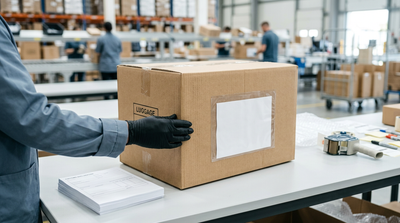
- Box the Suitcase: Place the suitcase inside a heavy-duty, double-walled corrugated cardboard shipping box. Fill open spaces with void-fill packaging material to prevent the suitcase from shifting during transit.
- Complete Legal Documentation: Prepare your Form B534, detailed packing list, and Air Waybill (AWB). Be precise: write "used personal cotton shirts," not just "clothes."
- Apply Labels Properly: Attach the shipping labels and customs pouch securely to the exterior of the corrugated box.
Pro Tip: Always place a backup copy of your shipping label, contact information, and Form B534 directly inside the main compartment of the suitcase. If the outer box is destroyed or the exterior label is torn off during transit, customs and carrier agents can open the bag to identify the owner and routing details.
6. Frequently Asked Questions (FAQ)
Do I have to pay import tax on shipped luggage to Australia?
No, provided your goods qualify as Unaccompanied Personal Effects (UPE). You must have owned and used the items for at least 12 months prior to shipping, and you must submit a completed Australian Border Force Form B534 to claim the duty-free exemption.
Can I ship a suitcase to Australia without putting it in a cardboard box?
Yes, but major private carriers like DHL, UPS, and FedEx will apply an Additional Handling Surcharge (AHS) for non-standard, unboxed packaging. Senders are strongly advised to pack suitcases inside cardboard boxes to avoid these fees and prevent conveyor-belt damage to straps and wheels.
Are shoes and hiking boots allowed to be shipped in luggage to Australia?
Yes, but they are subject to strict DAFF biosecurity inspections. Any dirt, clay, or organic soil residue on the soles will cause customs to hold the shipment for mandatory cleaning fees, quarantine treatment, or destruction.
How long does shipping luggage to Australia typically take?
Express air shipping via major couriers typically takes 3 to 7 business days, while standard postal methods take 10 to 20 business days. However, customs clearance and biosecurity checks can add several days to these timelines if your documentation is incomplete or if items require physical inspection.
7. Official Carrier & Government Reference Standards
For current 2026 rate schedules and regulatory updates, always consult the official entry requirements and carrier guidelines before booking your shipment:
- Australian Customs & UPE Concessions: Consult the Australian Border Force (ABF) at abf.gov.au to download Form B534 and verify the latest unaccompanied baggage rules.
- Biosecurity & Import Restrictions: Use the Department of Agriculture, Fisheries and Forestry (DAFF) BICON database at agriculture.gov.au to cross-check specific high-risk items.
- USPS International Limitations: Review the USPS International Mail Manual (IMM) Country Conditions for Australia at pe.usps.com for updated weight and size thresholds.
- Commercial Carrier Manuals: Refer to the official guidelines at ups.com and fedex.com for up-to-date packaging surcharges and volumetric billing rules.
Frankie analyzes carrier rate structures, 3PL fulfillment services, and shipping software to uncover hidden fees and operational efficiencies—helping you build a faster, more profitable e-commerce supply chain.